Is a temperature-control kettle worth paying for?
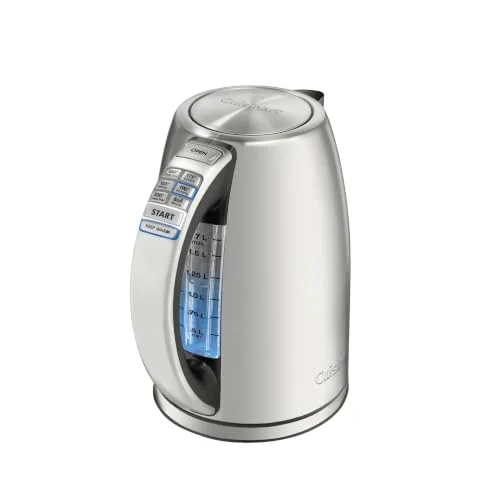
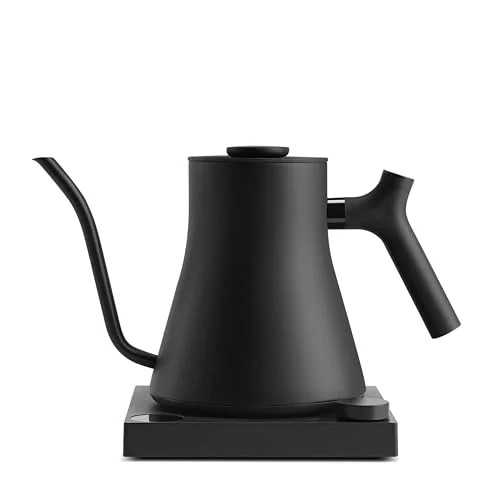
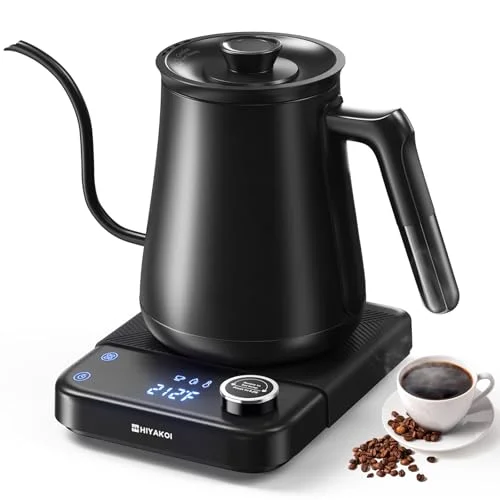
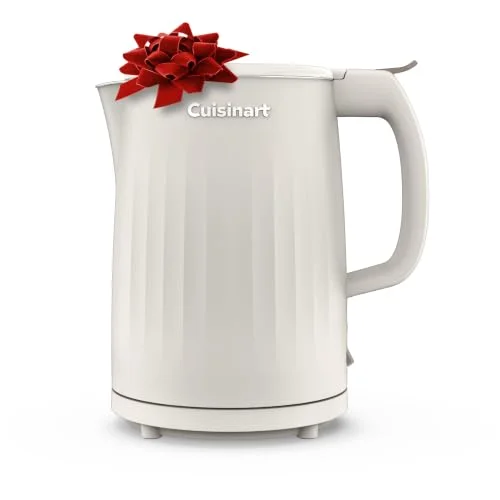
It depends on what you drink. Black tea, herbal tea, instant coffee and oatmeal all want water at or near a full boil, and a basic 1,500-watt kettle gets there as quickly as any other. Green, white and oolong teas, pour-over and French press coffee are usually brewed below boiling, and waiting for boiled water to cool is guesswork. Presets, like the six on the Cuisinart CPK-17P1, cover the common stops; to-the-degree control, on kettles such as the Fellow Stagg EKG Pro or OXO’s Brew gooseneck, suits people who fine-tune recipes.
What temperature should water be for tea and coffee?
These are brewing conventions, not rules. Cuisinart’s presets summarize the usual guidance well: about 160°F for delicate teas, 175°F for green, 185°F for white, 190°F for oolong, 200°F for French press and a full boil for black and herbal teas. Pour-over coffee guidance mostly falls between 195°F and 205°F. Hotter water extracts faster, which is why boiling water can turn green tea bitter. At altitude water boils below 212°F, which is why Fellow’s EKG Pro offers an altitude setting.
Why do electric kettles boil more slowly in the US than in Europe?
Voltage. US homes supply 120 volts, and a kettle on a standard US plug is designed to stay around 1,500 watts, the practical ceiling for a countertop appliance. British and most European homes supply around 230 volts, so kettles there commonly draw 2,000 to 3,000 watts and can boil up to twice as fast. Heating a liter of water takes the same energy everywhere; only the rate changes. The same logic explains why a 1,000-watt gooseneck is slower than a 1,500-watt full-size kettle.
Glass or stainless steel: which is better?
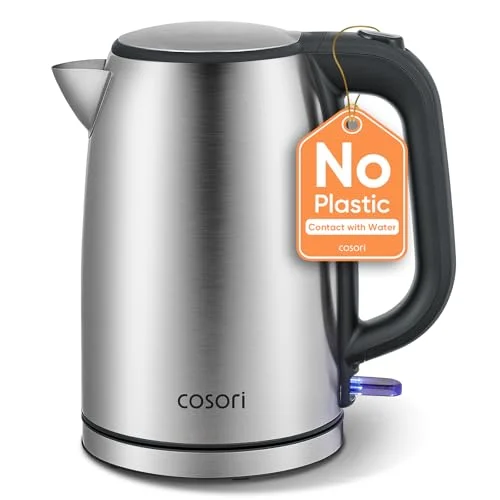
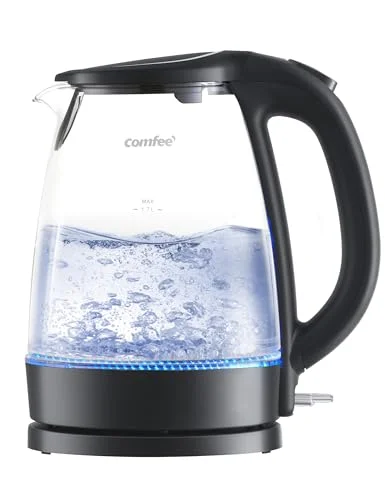
Neither wins outright. Glass, usually borosilicate, lets you watch the water and see mineral scale building up, which tells you when to descale. Steel hides scale and stains and takes knocks better, but a single-wall steel body gets hot, so choose a double-wall design like the Cuisinart Soho if a cool exterior matters. In either, look past the body to the lid, filter and water window, where plastic usually hides. Cosori makes a 1.7-liter kettle in each material with the same no-plastic-contact claim, so the choice can come down to preference.
Do I need a gooseneck kettle?
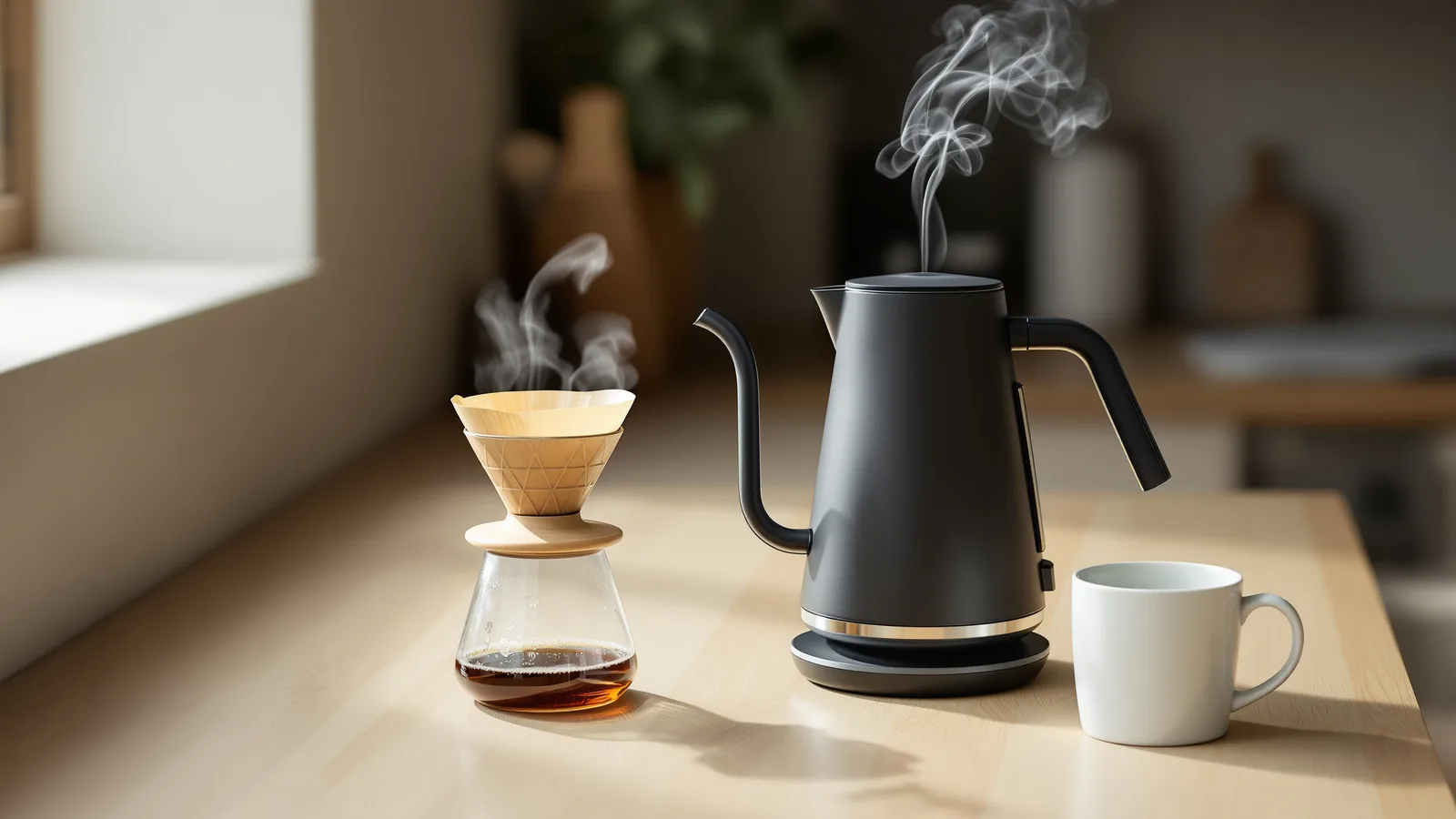
Only if you make pour-over coffee, or like to pour tea slowly into a small pot. A gooseneck’s long, narrow spout lets you control where the water lands and how fast, which an even pour-over extraction depends on. For everything else it is a handicap: the gooseneck kettles we compared hold 0.6 to 1 liter and pour slowly by design, so filling a teapot or a saucepan takes longer. If you want one for coffee, decide on temperature control at the same time; simple goosenecks such as Chefman’s one-touch model or the YTLAD boil only.
Does it matter whether plastic touches the water?
It is a materials choice, and for most people it comes down to taste and preference. Most kettles use some plastic, in the lid, the filter or the water window if not the body. A BPA-free label tells you the plastic avoids one compound; it does not tell you that no plastic contacts the water. A few makers put the stronger claim in writing — Cosori for its glass and steel kettles, Cuisinart for the Soho, Cocinare for its gooseneck — and name the parts that are steel. This is general information, not health advice.
How do I descale an electric kettle?
Start with the maker’s manual, which may specify a method. The common approach is a mild acid: fill the kettle partway with equal parts white vinegar and water, or water with a spoonful of citric acid, bring it to a boil, let it sit for 20 to 30 minutes, then empty it, wipe out the loosened scale and rinse with a fresh boil or two. Hard water can call for this monthly, soft water a few times a year. A wide opening, like the lift-out lid on Hamilton Beach’s glass kettle, makes the wiping much easier.